Blog 2-----When a Tadpole Wiggles in Brain-A ten minutes Baldur's Gate 3 experience
The loading screen of Baldur’s Gate 3 glows with an eerie purple light, where tentacles wrap around a broken sword and a hoarse voice hisses, “You are infected.” I sit up straight on the couch with my laptop on my knees and click “New Game.” For the next 10 minutes, I am not just a player but also a perceiver and an accidental critic, as this experience is an intense mix of my body, mind and the game world connecting to create a real and complex link.
I wake up in a crumpled escape pod, and the game’s text tells me that the air smells of burnt wiring, so I inhale sharply as if I can actually detect the acrid stench. My character is a Drow Warlock with sharp ears and dark skin, and a “Mind Flayer Tadpole” is squirming inside her skull. A prompt appears saying, “Press [E] to inspect the tadpole,” and when I click it, the screen blurs and a line of text crawls across: “It squirms. You can feel it ‘learning.’”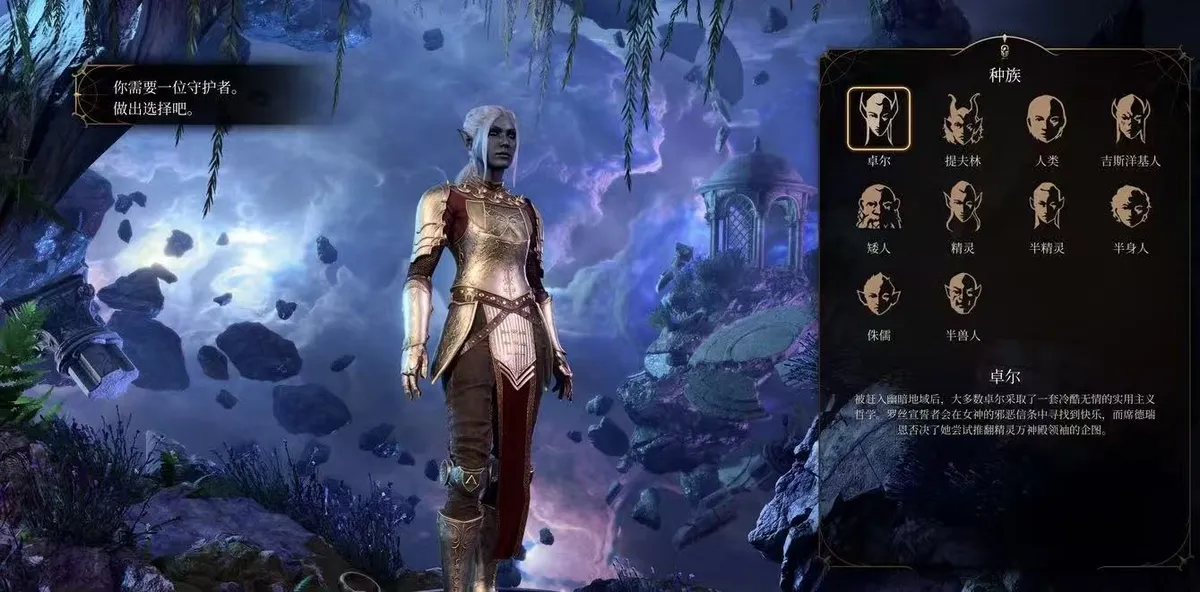
In real life,I feel nervous while my left hand hovers over the WASD keys, and this reflects what David Sudnow calls “eyeball discipline” in the “Eyeball” chapter of Pilgrim in the Microworld—a kind of focus that blurs the line between my body and the game’s controls, making me unconsciously touch my temple when I read about the tadpole’s movement.
I climb out of the pod and see a bleeding brain monster called "us" curled up next to a my character, shouting angrily: “ That tadpole will turn you into a monster.” I choose a threatening dialogue option, and the fight begins immediately. I stare at the brain, keeping an eye on my health bar and skill cooldown with my peripheral vision, then I use “Eldritch Blast” but the dice roll a 5, meaning I miss. I mutter a complaint as my body tenses up, and the monster hurts me, making my health drop by 3 points and the edge of the screen redden slightly.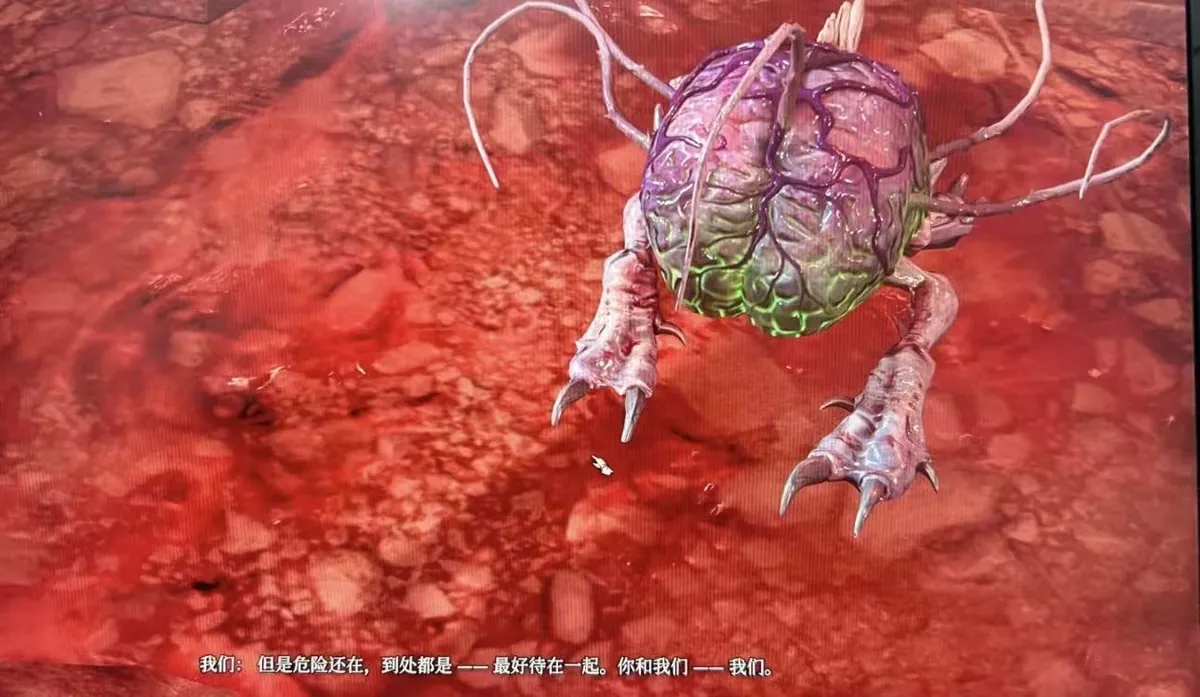
In the “Interface” chapter, Sudnow talks about a “natural scale match” between game controls and body movements, which fits Baldur’s Gate 3’s mouse and keyboard setup perfectly: I use the mouse to aim precisely and the keyboard to switch skills quickly, so my hands work smoothly with the on-screen actions.
After escaping from the ship, I have another battle with NPC. I spot a metal box next to the goblin, and use “Mage Hand” to hurl it at him, which makes the screen flash with the message: “Critical hit! 12 damage.” The goblin falls to the ground, and I let out a long breath as the tension in my fingers fades. When I search his body, I find half a moldy loaf of bread that not only heals a small amount of health but also shows the cruelty of the game world—just like the interface, it is both useful and meaningful.
These 10 minutes blend three perspectives: I feel the character’s struggles from a first-person view, the game uses the second-person “you” to draw me in, and I analyze its design from a third-person perspective. As Sudnow emphasizes “eye-hand teamwork,” my eyes track the action, my hands respond immediately, and the game’s feedback triggers both physical and emotional responses, which is the key magic of video games.
The time passes quickly, and when I close the game, my brain still feel a little tight, and I faintly sense the tadpole’s wiggle. There is no big story in this short experience, but small details make the virtual world feel real, and the interface is not just a tool but a bridge that allows me to have a true cross-world experience through small finger movements and focused eyes.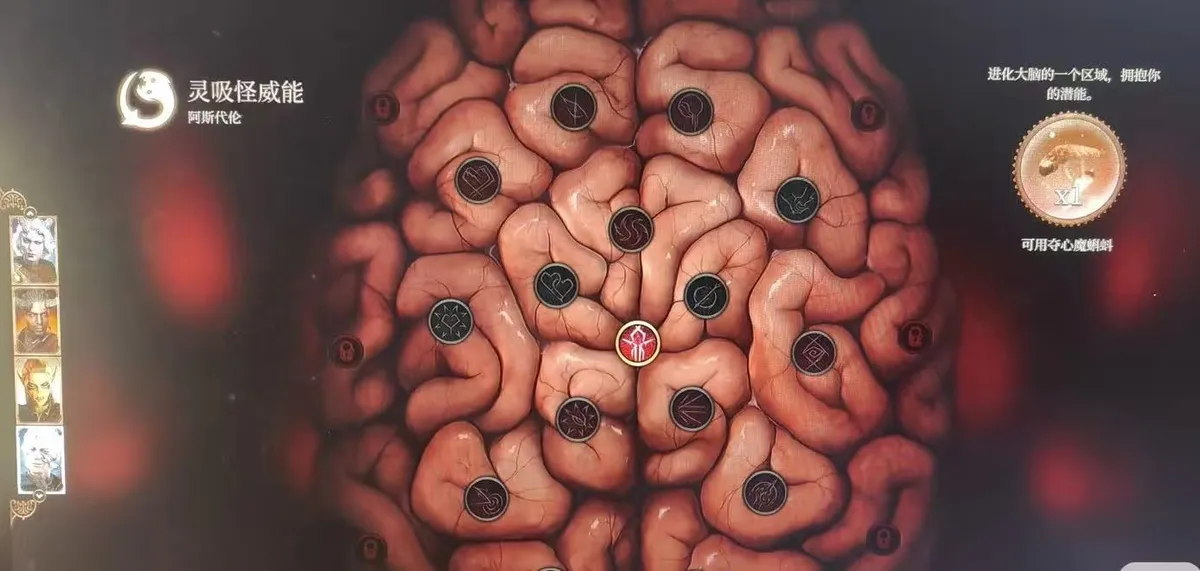
Work Cited 1David Sudnow's Pilgrim in the Microworld"interface"
2David Sudnow's Pilgrim in the Microworld"Eyeball"
3https://baldursgate3.game/ Baldur‘s Gate offical website